Concrete vs. Asphalt: Why the Trans Java Toll Road is a Silent Tire Killer
6 min read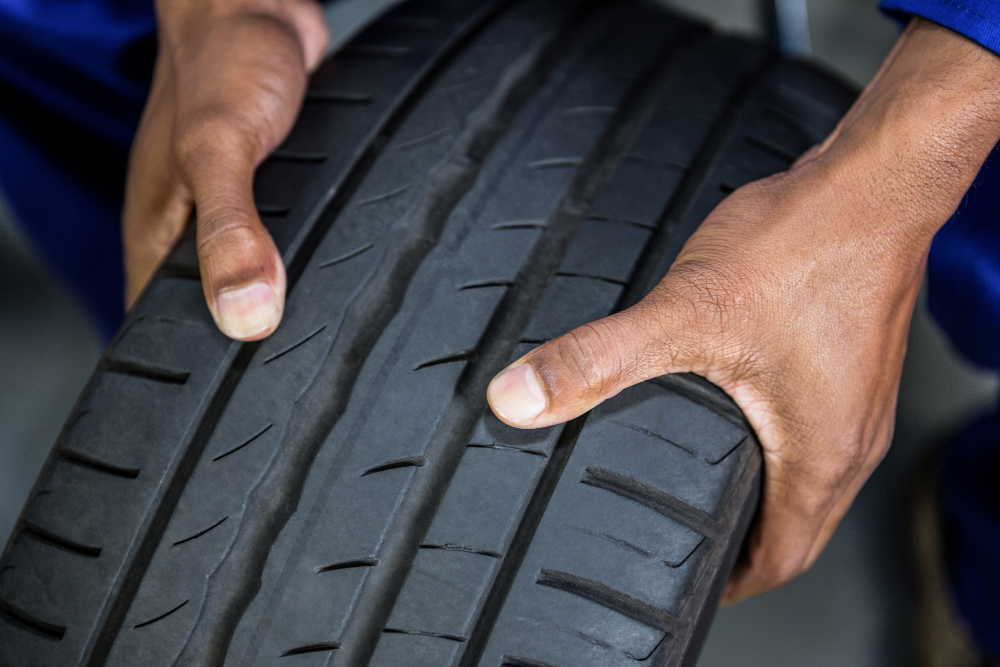
Sumber: https://www.freepik.com/free-photo/hands-mechanic-holding-tyre_1005686.htm
The Trans Java Toll Road has revolutionized logistics in Indonesia. What used to be a multi-day journey across the island can now be completed in a fraction of the time, boosting efficiency for logistics companies and travelers alike. However, this infrastructural marvel comes with a hidden cost that fleet managers are discovering the hard way: a dramatic increase in tire consumption.
While the connectivity is a boon for the economy, the specific engineering choice of the road surface presents a unique challenge. Unlike traditional asphalt roads, the Trans Java toll relies heavily on rigid concrete pavement. This structural decision impacts how tires interact with the road, generating higher heat and abrasion. Consequently, fleet operators are forced to replace tires more frequently, making cost-saving measures like professional tire retreading an essential strategy for survival in the competitive logistics industry.
In this deep dive, we will explore the science behind road surfaces, why concrete is so harsh on rubber, and how businesses can mitigate these rising costs.
The Engineering Divide: Rigid vs. Flexible Pavement
To understand why your tires are wearing out faster, we must first understand the ground beneath them. In civil engineering, road surfaces are generally categorized into two types: Flexible Pavement (Asphalt) and Rigid Pavement (Concrete).
1. Flexible Pavement (Asphalt)
Asphalt roads consist of aggregates bound together with bitumen. As the name implies, these roads have a degree of “give.” When a heavy truck rolls over asphalt, the pavement deflects slightly, absorbing some of the energy from the vehicle’s weight. This distribution of energy puts less stress on the tire itself. Furthermore, asphalt surfaces are generally smoother, resulting in lower rolling resistance and less abrasive friction.
2. Rigid Pavement (Concrete)
The Trans Java Toll Road utilizes rigid pavement—concrete slabs reinforced with steel. This choice is logical from an infrastructure planning perspective; concrete is incredibly durable, requires less maintenance, and can withstand the heavy loads of overloaded trucks better than asphalt in Indonesia’s tropical climate. However, concrete does not deflect. It is an unyielding surface. When a tire contacts concrete, the tire must absorb nearly 100% of the impact energy and deformation.
The Physics of Wear: Why Concrete Eats Rubber
The accelerated wear experienced on the Trans Java Toll Road is not a myth; it is a matter of physics involving three primary factors: Micro-texture Abrasion, Heat Generation (Hysteresis), and Joint Impact.
The “Sandpaper” Effect
Concrete surfaces are intentionally texturized to ensure grip and prevent skidding, especially when wet. This is achieved through “grooving” or “tining” the wet concrete during construction. While this provides excellent safety by increasing the coefficient of friction, it acts as a constant abrasive force against the rubber.
Imagine rubbing an eraser against a glass table versus rubbing it against a brick wall. The glass (asphalt) causes minimal loss of material, whereas the brick (concrete) shreds the eraser rapidly. Driving on these rigid concrete slabs for hours is like running a marathon on sandpaper; the continuous friction shows no mercy to the rubber soles, stripping away tread depth with every rotation. This metaphor perfectly encapsulates the relentless grinding your fleet’s tires endure on long-haul trips across Java.
Hysteresis and Heat Buildup
The most dangerous enemy of a tire is heat. On a rigid concrete surface, the tire undergoes significant deformation because the road does not bend. This constant flexing of the tire sidewalls and tread generates internal heat, a phenomenon known as hysteresis.
Concrete is also lighter in color than asphalt, reflecting sunlight rather than absorbing it. While this keeps the ambient air slightly cooler, the friction generated between the hard concrete and the tire creates intense localized heat. Data suggests that tires running on concrete can operate at temperatures 10% to 15% higher than those on asphalt. Prolonged exposure to this heat softens the rubber compound, making it more susceptible to scrubbing and irregular wear.
The Impact of Expansion Joints
Unlike continuous asphalt, concrete roads are built in slabs separated by expansion joints. As a vehicle travels at 80-100 km/h, the tires hit these joints repeatedly—thump, thump, thump. These micro-impacts may seem minor in isolation, but over a 600-kilometer journey, they amount to thousands of tiny collisions that stress the tire casing and the suspension system, leading to heel-and-toe wear patterns.
The Economic Impact on Logistics Fleets
For the average passenger car, the difference in tire wear might mean replacing tires every three years instead of four. However, for B2B logistics operators running heavy-duty trucks, the math is far more brutal.
Tires typically represent the second-largest operating cost for a fleet, right after fuel. Industry analysis indicates that shifting operations from predominantly asphalt routes to predominantly concrete routes can reduce projected tire mileage by 20% to 30%.
If a truck tire costs IDR 4,000,000 and usually lasts 100,000 km, a 30% reduction in lifespan increases the Cost Per Kilometer (CPK) significantly. Across a fleet of 50 trucks, this creates a massive hole in the operational budget. This financial pressure is why the “buy new, run to destruction” model is becoming obsolete.
Strategies for Mitigating Wear on Concrete Roads
You cannot change the road surface, but you can adapt your tire management strategy to survive it. Here are the most effective ways to combat concrete-induced wear.
1. Optimize Air Pressure
Under-inflation is disastrous on concrete. Since the road doesn’t absorb energy, an under-inflated tire flexes excessively, causing internal temperatures to skyrocket, leading to blowouts. Conversely, over-inflation reduces the contact patch, focusing the abrasive wear on the center of the tread. Maintaining precise PSI levels tailored to the load is non-negotiable.
2. Rotational Discipline
Because concrete roads often have a slight camber (slope) for drainage, and because the left lane (slow lane) on the Trans Java toll is often more damaged than the passing lane, tires will wear unevenly. Implementing a strict rotation schedule every 10,000 to 15,000 km helps distribute this wear evenly, extending the total life of the set.
3. Choosing the Right Compound and Tread Design
Not all tires are created equal. For rigid pavement, harder compounds are generally more resistant to abrasion, though they may sacrifice some wet grip. Closed shoulder tread designs are also preferred for trailer positions to resist the scrubbing forces caused by lateral drag on concrete.
4. The Critical Role of Retreading
This is the most potent weapon in a fleet manager’s arsenal. Since the abrasive concrete wears down the tread rubber long before the casing (the structural body of the tire) is fatigued, throwing away a tire simply because the tread is low is financial suicide.
High-quality retreading (vulcanizing a new tread onto an existing high-quality casing) restores the tire to a “like-new” condition for a fraction of the cost of a new tire—typically 30% to 50% of the price.
Advanced retreading processes, such as “Cold Retreading” (Pre-cure), are particularly effective. This method uses pre-vulcanized tread rubber with high-density compounds specifically designed to resist the high-scrub environment of concrete tolls. By retreading a casing 2 or 3 times, fleets can lower their CPK drastically, turning the challenge of the Trans Java toll into a manageable operational variable.
Conclusion: Adapting to the Hard Road Ahead
The Trans Java Toll Road is a permanent fixture in Indonesia’s logistics landscape. While its concrete surface presents a harsh environment for tires, understanding the physics of rigid pavement allows us to adapt. The combination of abrasive texture, heat generation, and joint impact requires a shift in maintenance culture.
Ignoring these factors leads to inflated budgets and safety risks. However, by implementing rigorous pressure maintenance, selecting appropriate compounds, and embracing the lifecycle economics of tire retreading, logistics companies can maintain profitability without sacrificing speed.
Don’t let the road dictate your profit margins. Take control of your tire assets by partnering with specialists who understand the unique demands of Indonesian infrastructure. For premium retreading solutions that stand up to the toughest concrete, contact Rubberman today and keep your fleet rolling efficiently.